
Most people who call us about a display or a sign already have glass in mind. Glass reads as premium, and for a long time it was the default. Then they lift a full sheet of it, or they watch what happens the first time a display takes a knock on a busy sales floor, and the question changes from which one looks better to which one actually holds up where this is going to live.
That last part is the whole decision. Acrylic and glass both look excellent when they are new and clean. The difference shows up in weight, in what happens on impact, and in what a fabricator can actually build with each one.

Weight and handling
Acrylic weighs roughly half of what glass weighs at the same size and thickness. On a small tabletop piece that barely matters. On a large panel, a storefront sign, or anything that has to be mounted overhead or shipped across the country, it changes everything: lighter mounting hardware, lower shipping cost, and a piece one person can install instead of two.
Clarity and light
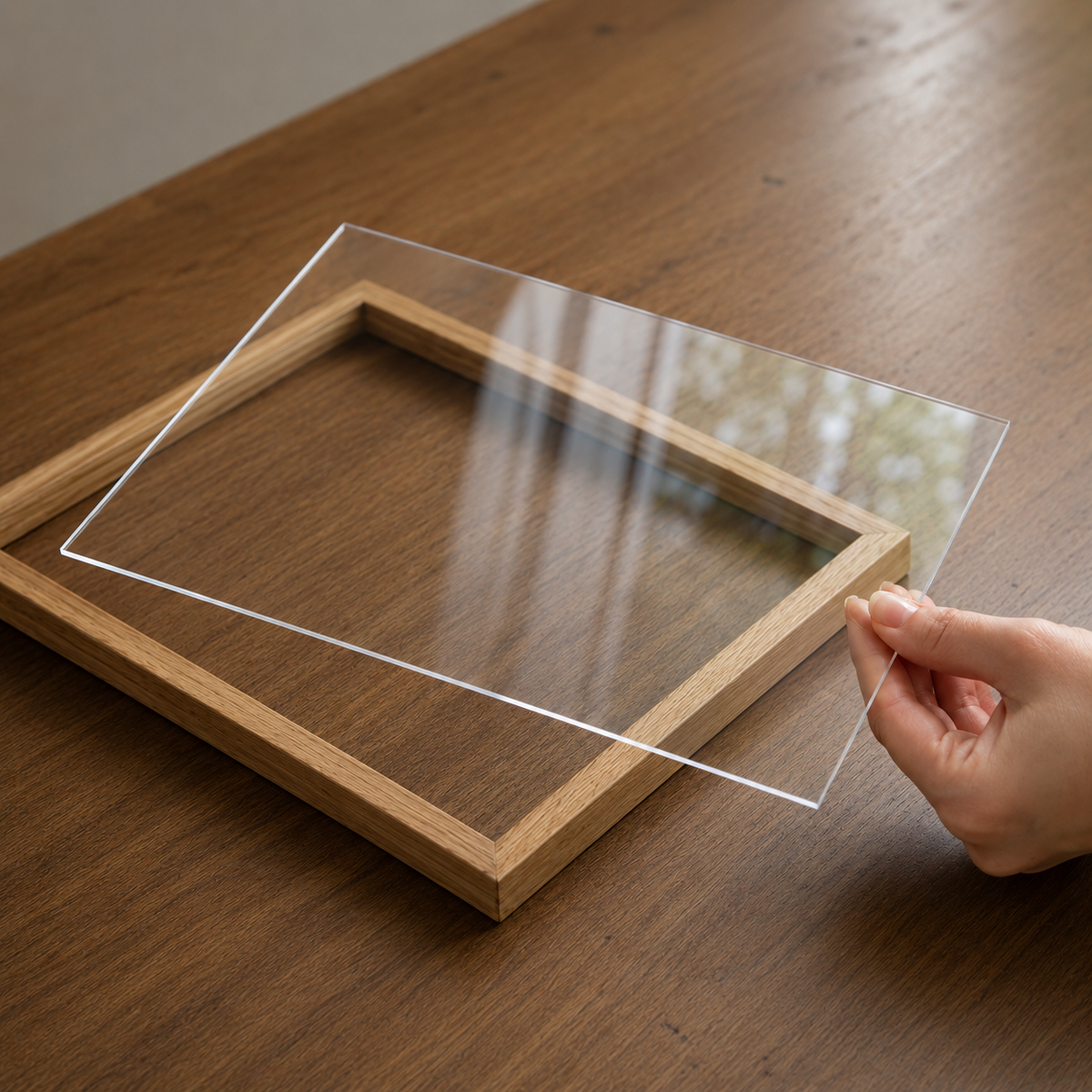
Cast acrylic transmits about 92 percent of visible light, slightly more than standard glass. In practice that means an acrylic display looks just as clear, and thick acrylic keeps a clean edge without the greenish tint you often see on the edge of thick glass. For retail displays, prints, and lit signage, that clarity is doing real work.
Impact and safety
This is where acrylic separates itself. It resists impact many times better than standard glass, and when it does fail it does not shatter into sharp shards. For anything in a public space, a store, an office lobby, a school, or an event, that is both a safety advantage and a durability one. A glass display that cracks is a hazard and a replacement. An acrylic one usually just keeps working.
What you can actually build with it
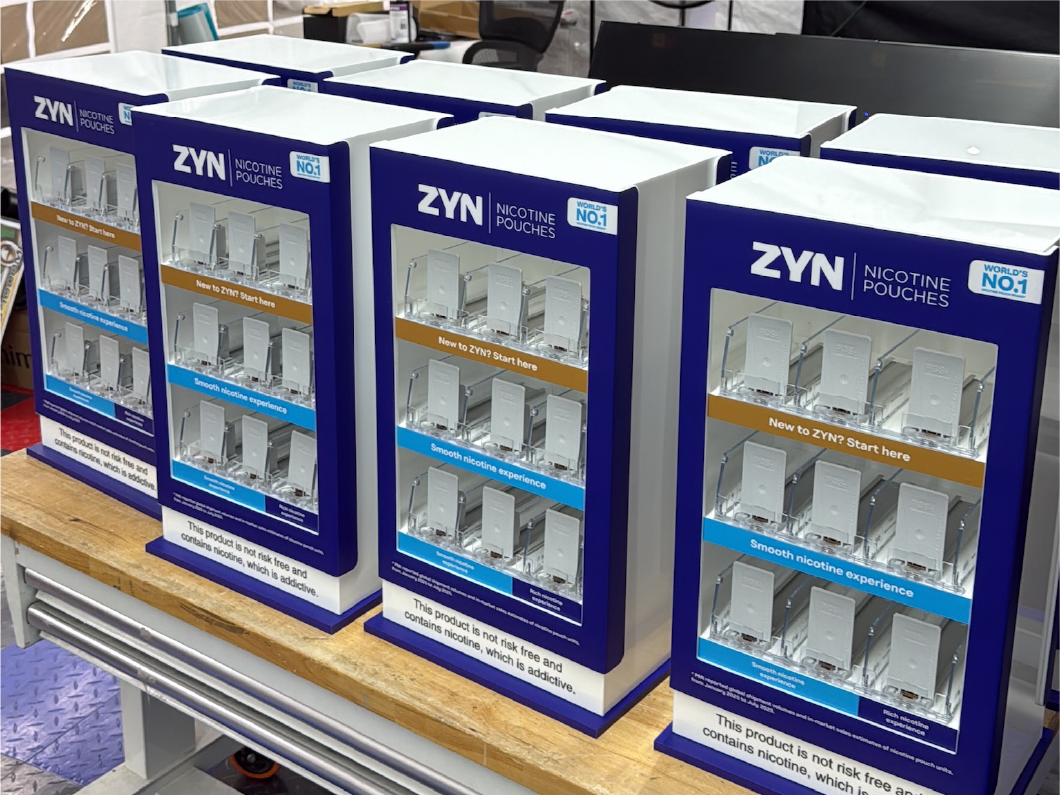
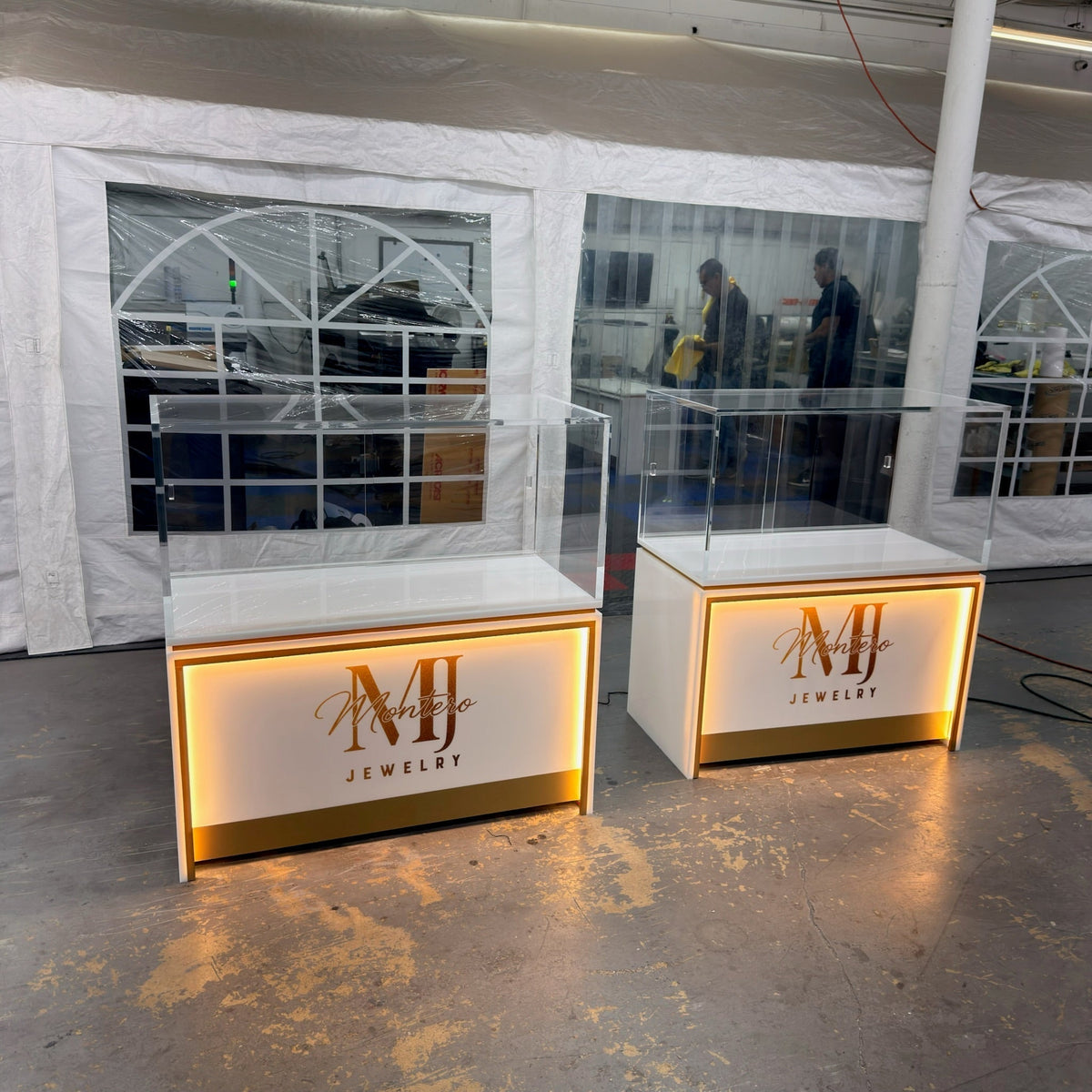
Acrylic can be cut, routed, drilled, polished, bent with heat, and bonded into shapes that glass simply cannot take without specialized equipment and cost. That is why custom displays, three dimensional letters, curved pieces, and complex fixtures are almost always acrylic. When a project needs a specific shape rather than a flat panel, the material choice is usually made for you.
Cost over the life of the piece
Sheet for sheet the prices are often close, and glass can even be cheaper in simple flat formats. The real difference is over time. Lower shipping weight, easier installation, and far fewer breakage replacements tend to make acrylic the lower total cost on anything that moves, ships, or lives in a high traffic space.
Where glass still makes sense
Glass is harder to scratch. For a surface that gets wiped down constantly, like a countertop, or an application where maximum scratch resistance matters more than weight or safety, glass can still be the right call. Being honest about that is part of specifying the right material, and acrylic does need proper cleaning to stay looking its best.
How to decide
Stop comparing the two materials in the abstract and look at where the piece is going. If it has to travel, hang, survive a public space, or take a custom shape, acrylic is almost always the better answer. If it will sit in one protected spot and face heavy daily wiping, glass is worth considering.
If you already know what you are building and just want a straight answer on which material fits, send us the details of the project and we will tell you what we would use and why.

Share:
How Large-Scale Acrylic Fabrication Works, From Drawing to Installation