
Jewelry is a hard thing to display well. The pieces are small, the details are the entire value, and the customer needs to see them clearly without anything getting in the way. At the same time, small and valuable means the display has a second job that most displays do not: it has to help protect what is inside. Acrylic is one of the few materials that does both jobs at once.
Clarity that gets out of the way
The best jewelry display is one the customer barely notices. Cast acrylic is exceptionally clear, and when the edges are diamond polished it reads almost like floating glass. That clarity lets a ring or a chain be the only thing the eye lands on, which is exactly what you want at the point of sale.
Working with light
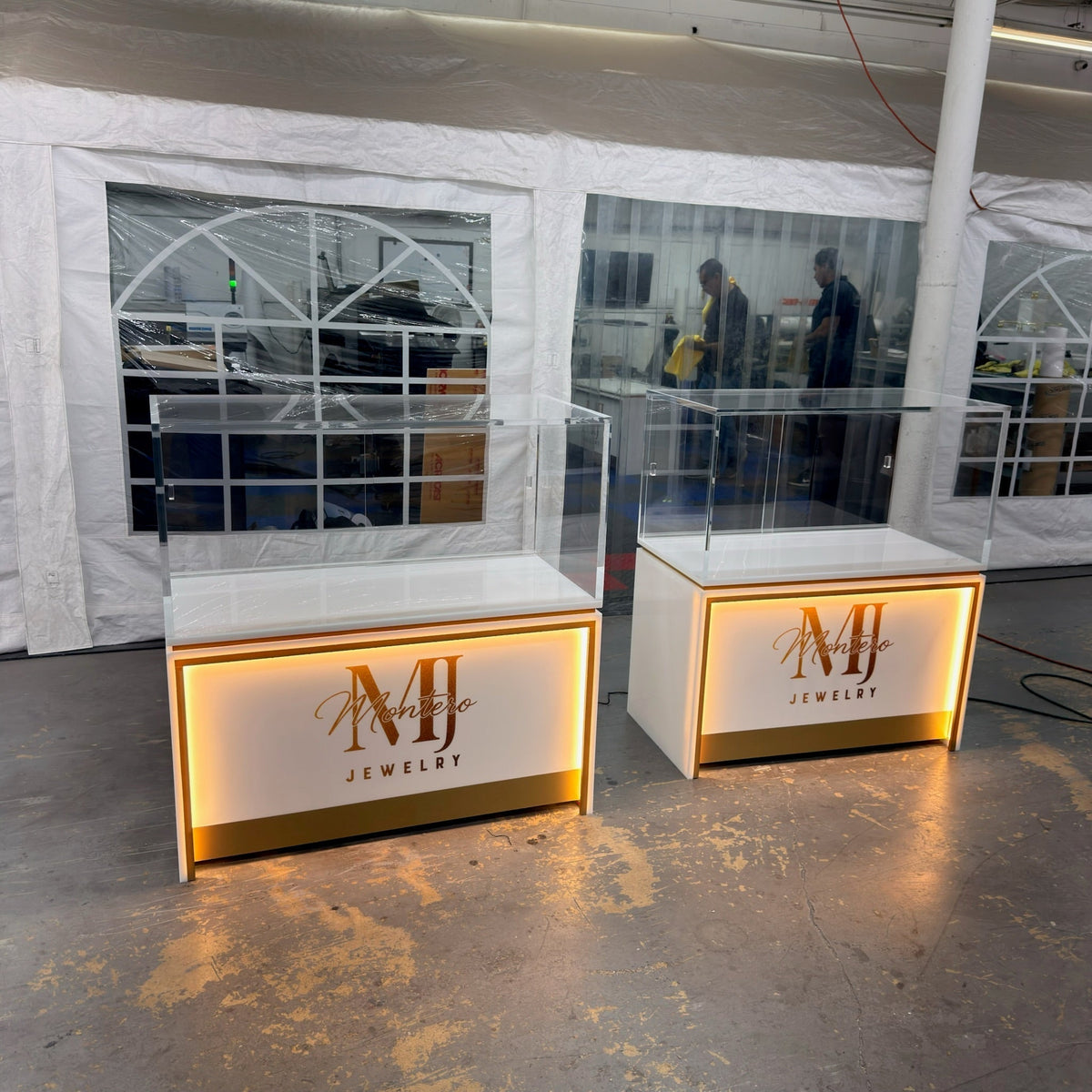
Jewelry sells on sparkle, and sparkle is really about light. Acrylic can be cut and formed to carry and direct light toward the piece, and it pairs cleanly with LED lighting built into risers, cases, and stands. A well-designed acrylic display does not just hold the piece, it lights it.
Security without hiding the piece
Small, high value items need protection, but a display that locks everything away behind something bulky kills the sale. Impact-resistant acrylic is a middle ground: it keeps pieces visible and reachable for staff while making a grab far harder than an open tray. Used as covers, locking cases, and enclosed risers, it slows down smash-and-grab attempts while keeping the display open and inviting.
Built to fit the piece
Necklaces, rings, watches, and loose stones each want to be shown differently. Custom acrylic risers, ramps, busts, and trays can be fabricated to the exact piece and the exact brand look, rather than forcing everything onto a generic stand. For a jeweler, that fit is part of how the brand presents itself.
Finish is everything at this scale
On a small piece viewed up close, every edge and seam is visible. This is where fabrication quality shows most: flame or diamond polished edges, clean bonded joints, and no cloudiness. A rough edge that would go unnoticed on a large panel is obvious on a jewelry riser held at eye level.
Designing your display
If you are setting up a case, a window, or a full counter and want the pieces to carry the attention while staying protected, that is a design problem worth getting right. Tell us what you are showing and the look you are after, and we can work out how to build it.
Share:
How Acrylic Protects Products in High-Traffic Commercial Environments
How Large-Scale Acrylic Fabrication Works, From Drawing to Installation