
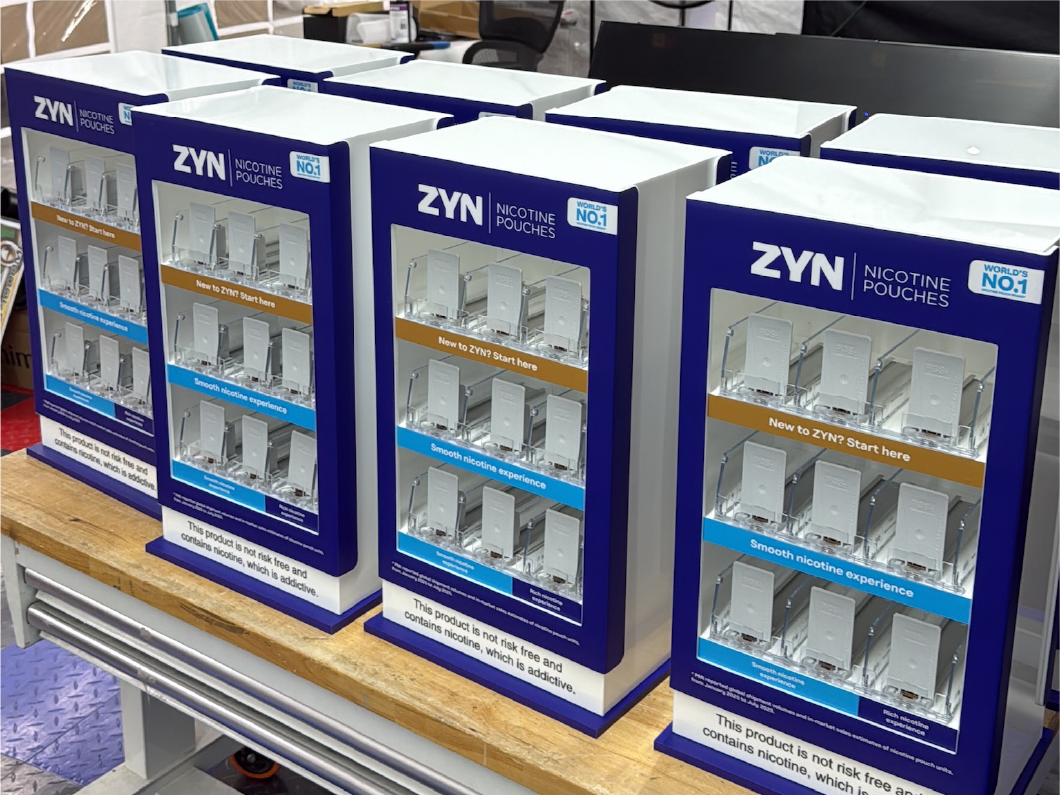
A single acrylic display and a run of two hundred of them are not the same job at a larger size. They are different jobs. Anyone can make one piece look right. Making the two hundredth piece identical to the first, on schedule, and getting all of them to the site intact is where fabrication actually gets tested. For architects, retail chains, and institutions, that consistency is usually the whole point.
Here is how a large project moves through the shop, and where the quality is either built in or lost.

It starts with the drawing
Before anything is cut, the project lives as a technical drawing. Dimensions, tolerances, material, thickness, edge treatment, mounting method, and how the parts fit together are all settled on paper first. This is the stage where problems are cheap to fix. A detail confirmed here saves a run of parts that would otherwise be scrapped later.
Choosing the right material at volume
Material choice is not just clear versus colored. Cast and extruded acrylic behave differently under machining and heat, thickness affects both strength and cost, and a large order means committing to a specific grade across every piece. Getting this right up front is what keeps a run consistent from the first sheet to the last.
Cutting: laser and CNC
Laser cutting gives clean, polished edges and fine detail, and it is fast for flat parts. CNC routing handles thicker material, three dimensional profiles, and heavy production volumes with tight repeatability. Most large projects use both, matched to what each part needs. The goal at volume is not just a good cut, it is the same cut a thousand times.
Forming, bonding, and finishing
Flat parts become finished pieces through heat forming, bending, and bonding. Clean joints and properly polished edges are what separate professional work from something that merely functions. Diamond edge polishing, in particular, is what gives thick acrylic that clear, glass-like edge instead of a cloudy one.
Quality control across the run
On a large order, checking the first piece is not enough. Parts are inspected throughout the run so that drift in dimensions, clarity, or finish is caught early rather than discovered at delivery. This is the least visible part of fabrication and the one that matters most on a big job.
Logistics and installation
Acrylic is lighter than glass, which helps, but large panels and finished displays still need proper packing, sequencing, and sometimes on-site installation. Planning how pieces are crated and how they arrive in the right order is part of the build, not an afterthought.
Why this matters for your project
When you are specifying acrylic for a store rollout, a building, or an institution, you are really buying consistency and reliability at volume, not a single nice-looking sample. If you have drawings or a scope you are working through, share them with us and we can talk through how the project would actually be built.

Share:
Acrylic Displays for Jewelry: Showcasing Small Pieces with Clarity and Security
Acrylic vs Glass: Which One Is Right for Your Display or Sign