
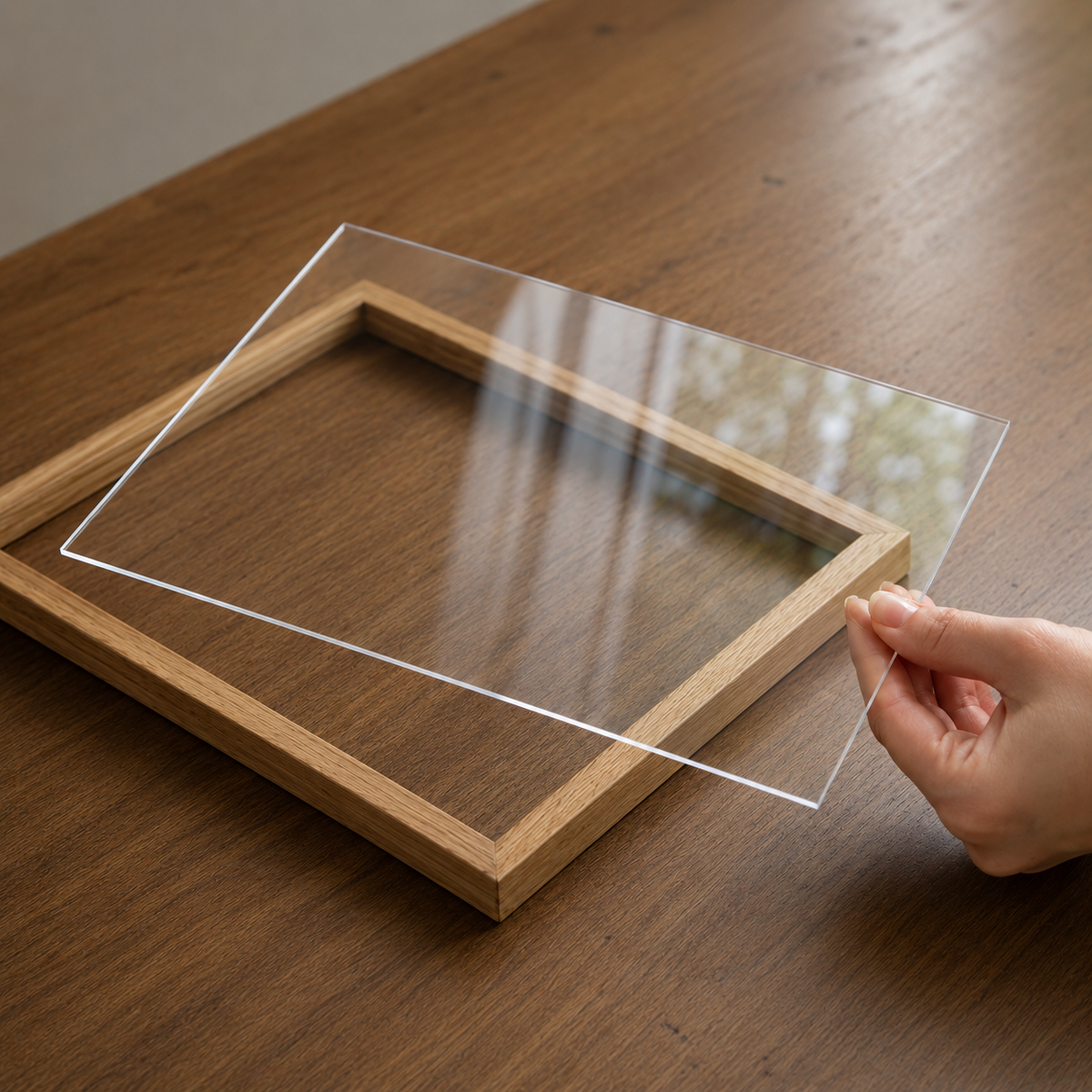
This complete acrylic guide explains everything you need to know about the material: what it is, the two main types, how they differ, and where each performs best. Acrylic, also known as PMMA (polymethyl methacrylate), is a transparent plastic that resembles glass but is significantly lighter, stronger, and more versatile. Its ability to adapt to different thicknesses, colors, and finishes has made it essential across advertising, architecture, interior design, and furniture manufacturing.
At South Florida Acrylics, we work with high-quality acrylic and precision fabrication to get the strength, optical clarity, and durability a project needs.
The two main types: cast and extruded
Almost all acrylic is made one of two ways, and the difference affects how it looks, cuts, and performs.
Cast acrylic
Cast acrylic is made by pouring liquid acrylic into molds where it hardens into sheets. This produces a higher-grade material known for excellent clarity and better resistance to scratching. It laser cuts with clean, polished edges, engraves with a bright frosted mark, and polishes beautifully, which makes it the preferred choice for displays, signage, awards, and anything where the finish matters. It also comes in the widest range of colors and specialty finishes.
Extruded acrylic
Extruded acrylic is made by pushing molten acrylic through rollers, which gives more consistent thickness and a lower cost. It is easier to thermoform and bond and works well for vacuum forming and general glazing, but it is softer, scratches a little more easily, and does not engrave as crisply as cast. For high-volume, budget-sensitive, or formed parts, extruded is often the practical choice.
How to choose between them
As a rule of thumb, choose cast when appearance, clarity, engraving, or polished edges matter, and consider extruded when cost, consistent thickness, or forming is the priority. Many projects use both, matched to the part.
Benefits of acrylic compared to other materials
- Much lighter and easier to install than glass
- Many times more impact-resistant than glass
- Excellent light transmission, around 92 percent for clear cast
- Available in clear, opal, mirror, matte, translucent, and many other finishes
- Highly versatile: can be cut, bent, engraved, and UV printed
- UV-stable options for durable indoor and outdoor use
Caring for acrylic
Clean acrylic with a soft microfiber cloth and a plastic-safe cleaner. Avoid paper towels, abrasive pads, and ammonia-based glass cleaners, which can scratch or haze the surface. Light scratches in cast acrylic can often be polished out, one of its advantages over coated materials.
Frequently asked questions
Is acrylic the same as plexiglass?
Plexiglas is a brand name for acrylic. The terms are used interchangeably, so plexiglass generally just means acrylic sheet.
Is acrylic stronger than glass?
Acrylic is far more impact-resistant than standard glass and much lighter, though glass is harder to scratch. For most signage, displays, and safety-conscious uses, acrylic is the stronger practical choice.
Can scratches be removed from acrylic?
Minor surface scratches in cast acrylic can often be buffed or polished out. Deeper gouges are harder to fully remove.
If you are weighing acrylic for a project and want a straight recommendation on type, thickness, and finish, tell us what you are building and we will point you to the right material.
Share:
Custom Acrylic Podiums for Events in South Florida