
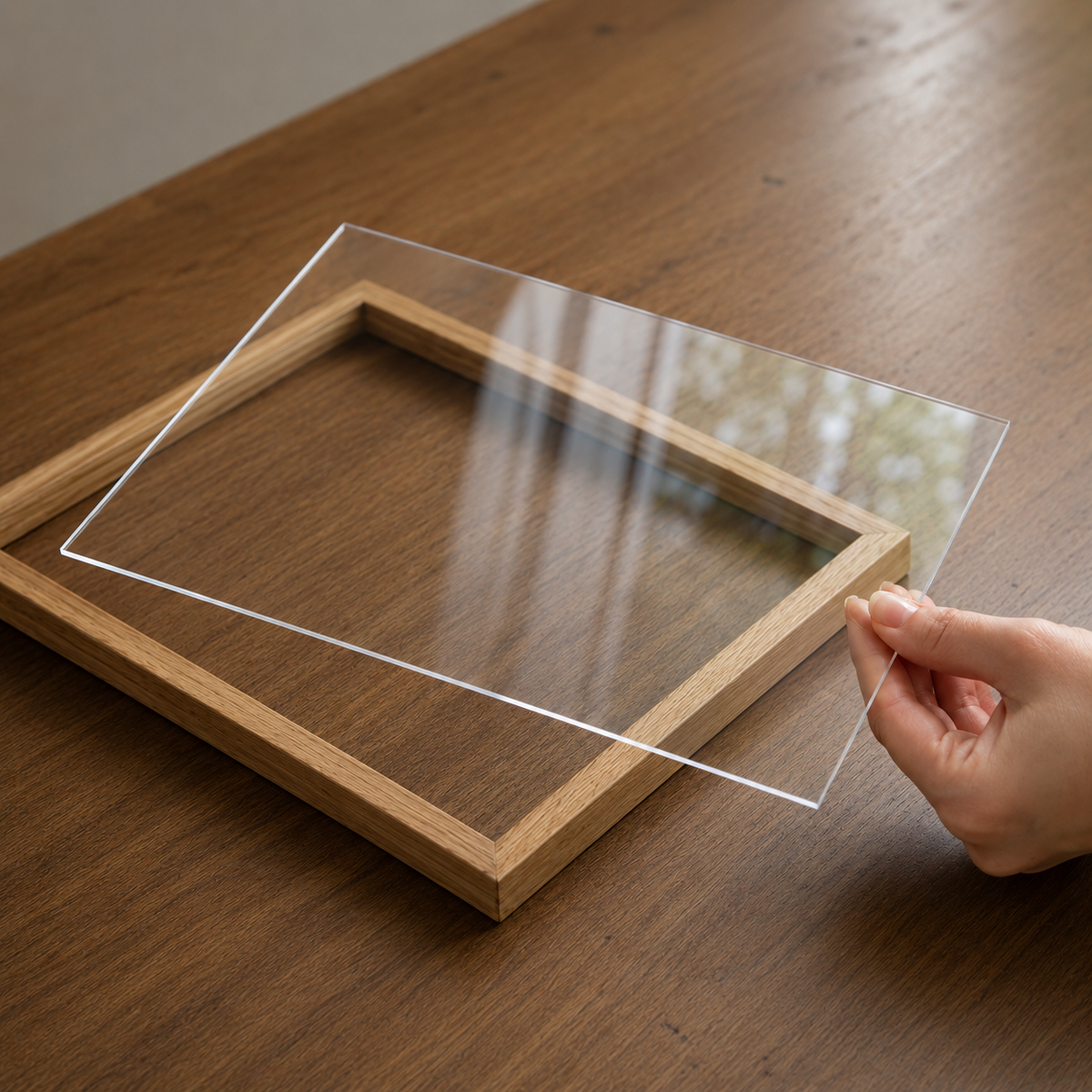
Flat acrylic signs are the clean, glass-like panels used for lobby signs, office plaques, wayfinding, and branded interiors. They are the most straightforward form of acrylic signage and often the most cost-effective way to get a professional look without dimensional letters or illumination. Here is how they are made and where they fit best.
Where flat acrylic signs fit best
They work best where a crisp, understated panel is what the space calls for: reception and lobby signs, conference room and office plaques, directional and wayfinding signs, suite and door numbers, and commemorative plaques. Mounted on standoffs, a flat panel reads as modern and intentional.
First-surface versus second-surface printing
Graphics can be printed on the front of the panel or on the back of a clear panel, known as second-surface printing. Second-surface printing places the acrylic over the ink, which protects the graphic from scratches and cleaning and gives the sign depth. It is a small detail that makes a noticeable difference in durability and finish.
Customization options
Flat signs support full-color UV printing, applied vinyl graphics, and engraving, and can be cut to any size, shape, and thickness. Clear, frosted, white, black, and colored acrylics each give a different base look, and layered panels can add subtle dimension without the cost of full 3D lettering.
Standoff mounting
Polished metal standoffs hold the panel slightly off the wall, casting a light shadow that lifts the sign and gives it a premium, architectural feel. Standoffs also make installation clean and repeatable, which matters when you are hanging many signs across a building.
Interior and ADA signage
Many interior identification signs, such as restrooms and room numbers, must meet ADA requirements for non-glare finish, contrast, tactile characters, and braille. Flat acrylic is a natural fit for compliant signage, and it is worth identifying which of your signs fall under those rules before production.
A practical entry into acrylic signage
Because they use less material and fabrication than dimensional or illuminated signs, flat acrylic signs are usually the most budget-friendly option, and a strong starting point for businesses that want a consistent acrylic look across many signs.
Frequently asked questions
Are flat acrylic signs cheaper than 3D letters?
Generally yes, since they use less material and fabrication. They are a cost-effective way to get a clean, professional acrylic look.
Can flat signs be used outdoors?
Yes, with UV-stable acrylic and second-surface printing to protect the graphic, along with weather-appropriate mounting.
Can you make ADA-compliant signs?
Yes. Acrylic works well for ADA signage with the required tactile characters, braille, contrast, and non-glare finish.
Tell us what the sign needs to say and where it will go, and we will help you specify size, printing, and mounting.
Share:
Acrylic Channel Letters – Bold Signage with Maximum Visibility
Custom Acrylic Signs – Modern Signage for Every Business