
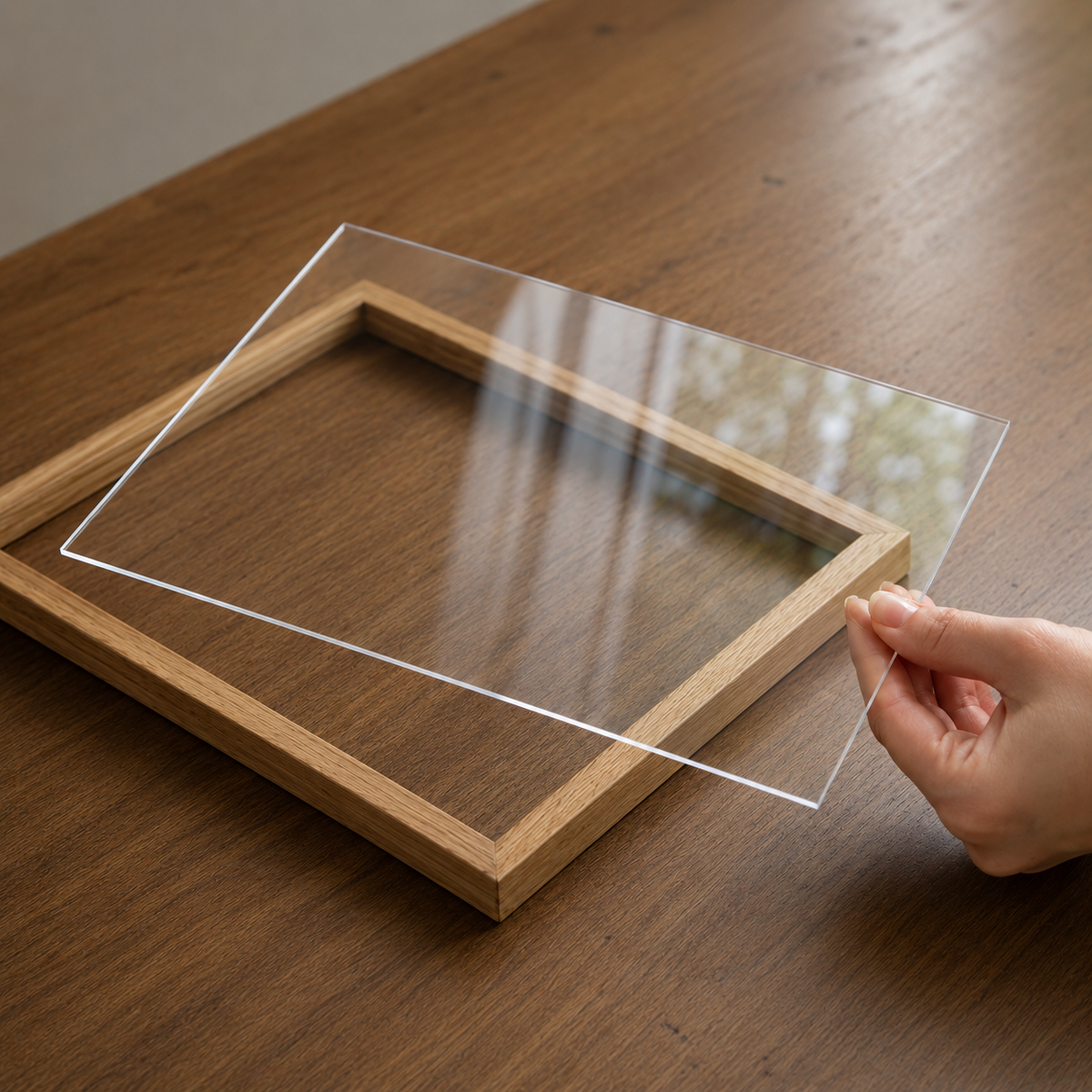
Diamond edge polishing is a finishing step that turns a cut acrylic edge into a clear, glass-like one. On premium pieces, the edge is often the first thing people notice up close, and a diamond-polished edge is what separates professional fabrication from a cut that merely functions. Here is how it works and where it matters.
How diamond polishing works
A diamond-tipped cutter passes along the edge and shaves an extremely fine, precise layer, leaving a smooth, optically clear surface. Because it cuts rather than melts the material, it produces a transparent edge without the distortion or internal stress that other methods can introduce.
How it compares to other methods
Flame polishing passes a flame over the edge to gloss it quickly; it is fast but less consistent and can introduce stress that leads to fine cracks, or crazing, over time. Hand sanding and buffing can smooth an edge but rarely reach true optical clarity. Diamond polishing gives the clearest, most consistent, and most durable result, which is why it is used on high-end work.
Where a polished edge matters most
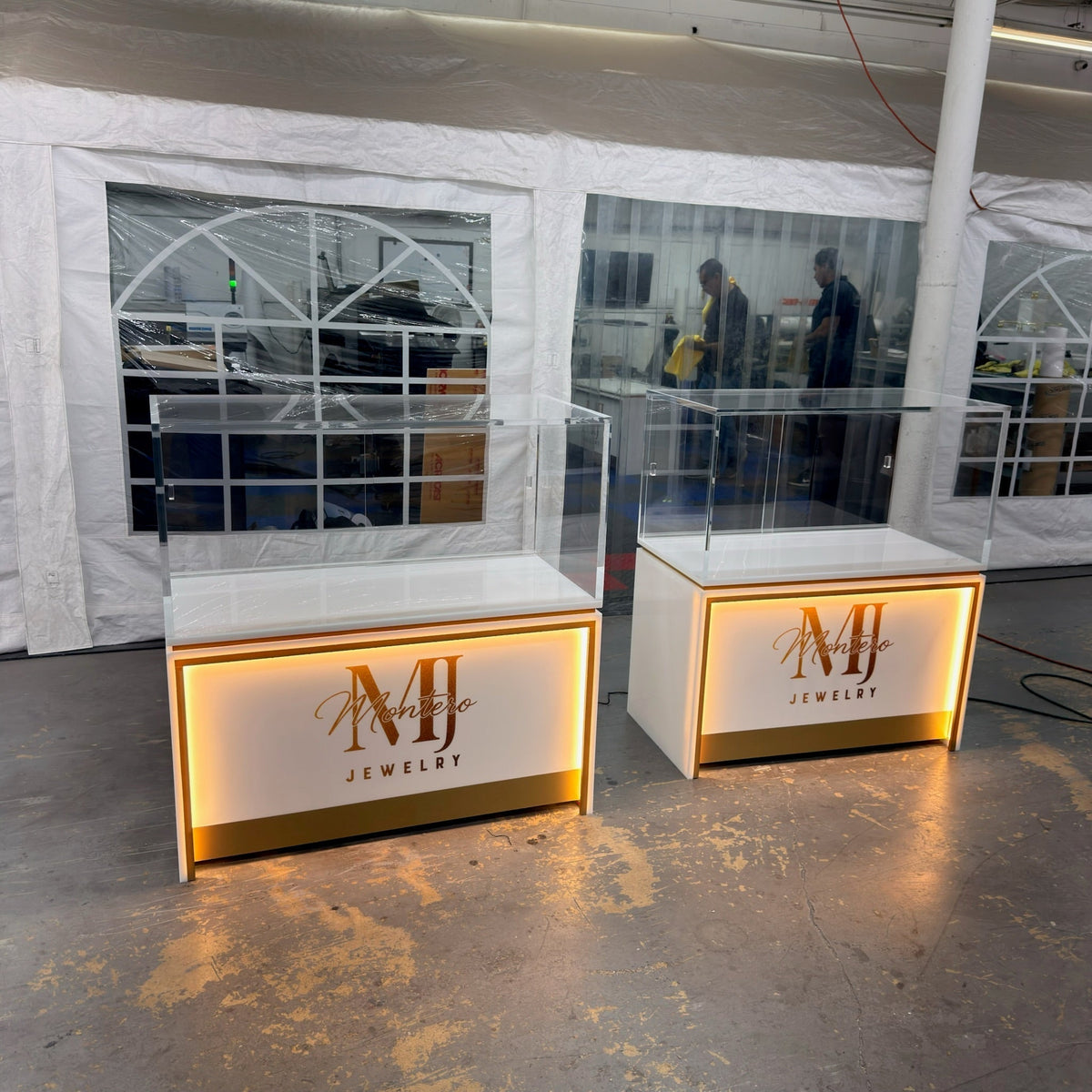
It matters most on pieces seen and handled up close: luxury retail displays, museum-grade cases, premium furniture, edge-lit signage, and architectural components. On these, a cloudy or rough edge undercuts the whole piece, while a clear one makes the acrylic read like glass. Edge-lit signs in particular rely on a polished edge to carry light evenly.
What it works on
Diamond polishing is ideal for straight edges and is commonly applied to the perimeter of panels and the edges of thicker stock. Very tight curves and intricate profiles are usually finished by other means, so straight, clean edges are where diamond polishing gives its best result.
Consistency across a production run
The real advantage on larger jobs is uniformity. Every edge across a run comes out to the same standard, which keeps a set of displays or cases looking like one cohesive product rather than a batch of individual parts.
Frequently asked questions
What is the difference between diamond and flame polishing?
Flame polishing is faster but less consistent and can cause stress crazing over time. Diamond polishing gives a clearer, more durable, optically clean edge.
Does every acrylic edge need diamond polishing?
No. It is worth it where edges are visible or edge-lit. Hidden or bonded edges often do not need it.
Can you diamond polish curved edges?
Diamond polishing is best for straight edges. Curves and detailed profiles are finished by other methods.
If your project calls for flawless edges, tell us the pieces and quantities and we will handle the finishing.

Share:
CNC Cutting Services – Precision and High-Volume Production
Retail Display Design Trends for Modern Stores in 2026